

As we dive into deeper into fall, a period time within the cycle of the year where time shifts backwards (day light savings) and we head into a period of heightened contemplative practice, I am excited to explore with you the practice of mandala making.
Given this season of the year, engaging in the mindfulness practice of creating a mandala gives us a tangible action to bring peace, reverence, and prayer to what is needed in the depths of our psyche as well as our collective consciousness.
In Sanskrit the word mandala means circle, “a sacred circle embodying a container for the essence within.” (Izzy Lenihan) Not only does the mandala represent the divine essence within, but it also embodies the universal law of “as within, so without.” A perfectly unperfect mirror of the cosmos.
I invite you to engage in the co-creative process of making a mandala (with its many possibilities and variations!) to enter into the hibernation period of our lives with beauty, presence, and creative action.
Warmly Yours,
Jen
“Mandalas help us access a deeper creative source that goes beyond logic and order and into mystery, creativity, And intuition.”
~ Heather Plett
questions for reflection
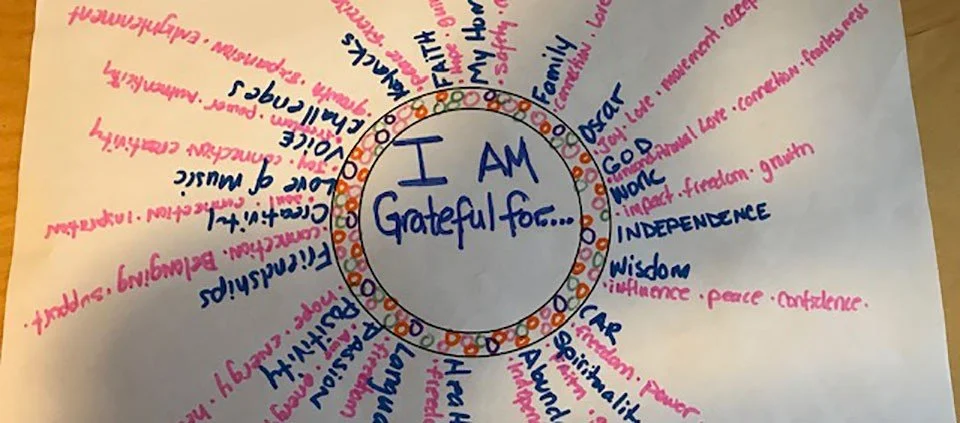
Make a list of concepts that you want to bring into your mandala creation beginning with yourself, then community, and finally the global family. For example, a concept for self could be heightened patience while a concept for the global family could be tolerance. Write your list as a reference to bring to your mandala ritual.
Have you made a mandala before in any form? How was that process for you? Did you experience any challenges or blocks with it? What did you learn about yourself during your mandala journey? If you have not made a mandala before, how do you feel about the invitation to co-create one this month? Track what is coming up for you and why.
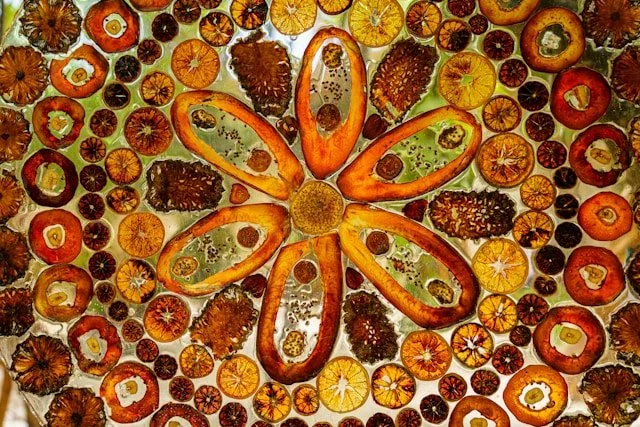
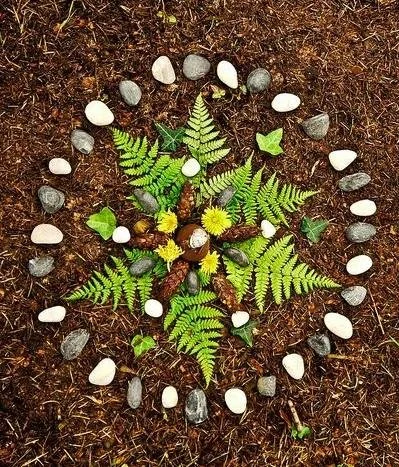
Consider ALL the ways a mandala can come into form. In the photo above the artist has used dried fruit. Contemplate the medium that most speaks to you. Here are a few examples: colored sand, food items such as grains and beans, a coloring book, natural found items, paints or pastels, flowers, pen and pencil, fabric, wood carving or burning, clay, or digital design.
“Any ritual is an opportunity for transformation.”
~ Starhawk
ManDala ritual Invitation
This ritual arose from a combination of experience, divination, guidance, and natural cycles. Create the time & space to bring regular ritual into your life using this pdf as a guidepost.
Make your mandala! Using the information from the questions for reflection, begin to craft a mandala that represents a prayer of truth for you. This practice can take place in one sitting, or throughout the dark season. You can add to it day by day or week by week. Lean into what feels right for you and enjoy the journey!
“Making a mandala is a universal activity, a self-integrating ritual.”
~ Jose Arguelles
Mandalas in Tibetan Buddhism
In Tibetan Buddhism, according to licensed clinical psychologist Shannon Dobbs Psy.D., mandalas are created as a form of meditation to gain a deeper understanding of the universe and the self. “Sand mandalas are intricately made using colored sand and are eventually destroyed to symbolize the impermanence of life,” she explains.
Mandalas in Hinduism
In Hinduism, mandalas are often used in rituals and meditation practices, Dobbs notes. “They represent the universe and the interconnectedness of life," she says, "often depicting deities within geometric patterns.”
Mandalas in Native American spirituality
In Native American spirituality, something called a medicine wheel (similar to a mandala), is used as a symbol of harmony and the interconnectedness of all elements in life, according to Dobbs. “It is also used for meditation and ritual purposes," she adds.
Mandalas in Christianity
While Christianity doesn't feature the same kinds of mandalas as we see in eastern traditions, Christian churches often have rose windows, which resemble mandalas, Dobbs explains. These "[symbolize] the unity and infinity of the universe as seen through the lens of the Christian faith,” she notes.
Meaning & symbolism of a mandala
The patterns, shapes, and colors of a mandala are all symbolic. As Dobbs explains, “Circles can represent wholeness, squares can symbolize the physical world, and intricate patterns might represent the complexity of the universe."
The patterns and colors that a person uses can also be meaningful and have cultural significance, with certain colors representing different feelings or ideas based on the focus or purpose of the mandala. “In general," Dobbs says, "red can symbolize strength, blue can represent calmness, yellow can represent learning or wisdom, and green can symbolize nature or healing."
(Written by Lauren David)
Guided Seasonal meditation
“Everything that shows up in your mandala is a vehicle for your awakening. From this point of view awakening is right at your fingertips continually.”
~ Pema Chodron
RESOURCE ARTICLE
This is a good, quick read!
